Why Solar Powered Cameras Are Ideal for Remote Construction Sites
Remote construction sites have always been the hardest to watch.
Not because the risks are different. Not because the documentation requirements are lower. But because the infrastructure that makes monitoring convenient on an urban site does not exist on a greenfield development or a rural construction corridor. No mains power. No fixed network. The camera that works perfectly on a city-centre site cannot be installed where the monitoring is needed most.
A solar timelapse camera breaks this constraint. It brings its own power, its own connectivity, and its own data management — a complete monitoring system that requires nothing from the site infrastructure. Install it where the view is right. The sun does the rest.
This guide covers why solar-powered timelapse cameras have become the default choice for remote site monitoring, what they deliver that no alternative can match, and how to specify one that will perform for the full duration of your project.
The Remote Site Problem That No Conventional System Solves
A conventional site camera requires two things that remote sites rarely have: a power source within reasonable cable distance, and a data connection to transmit footage. On a remote site, neither is a given. The perimeter fencing may be kilometres from the nearest mains supply. Running cable is expensive and creates infrastructure that gets damaged as the site develops.
On a well-serviced urban construction site, both of these can usually be arranged. On a remote site, neither is a given. The perimeter fencing may be kilometres from the nearest mains supply. The cellular coverage may be marginal or nonexistent. Running cable is expensive, creates infrastructure that gets damaged as the site develops, and still does not solve the connectivity problem.
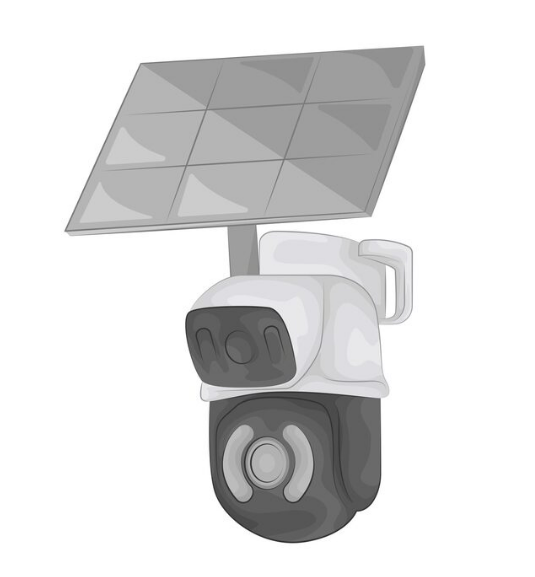
A solar-powered camera is designed specifically for this environment. The solar panel charges the battery during daylight hours. The battery powers the camera, the image sensor, and the cellular modem through the night and through periods of low solar input. The cellular modem transmits footage to a cloud platform where it can be reviewed by anyone with access, from any device, regardless of where the camera is physically located.
The result is that monitoring capability which used to require site infrastructure can now be deployed anywhere the sun reaches. Which, on most construction sites, is everywhere.
What a Solar Timelapse Camera Actually Captures on a Remote Site
The value of a solar timelapse camera on a remote construction site goes well beyond the security function that most people associate with camera systems. Remote sites have specific documentation challenges that the timelapse record addresses in ways that no other format can.
Progress documentation for distant stakeholders is the most immediately obvious value. A client who cannot visit a remote site weekly needs a way to understand what is happening between the milestone reports. A timelapse record that shows each day’s construction activity in a compressed sequence, accessible from a phone, provides the continuous visibility that physical visits cannot practically deliver.
Weather and environmental condition documentation is particularly valuable on remote sites where conditions can change rapidly and where weather-related delay claims are more common than on urban projects. A timelapse record during a storm or extended freeze provides the objective contemporaneous evidence that underpins a delay claim in a way that a site diary entry cannot.
Environmental compliance documentation is an increasingly important requirement for construction projects in remote and sensitive locations. Coastal developments, projects near protected habitats, and infrastructure corridors through areas of environmental significance are all subject to compliance monitoring requirements that include visual documentation of site conditions.
solar-powered camera positioned to cover the materials compound and the site access generates both a deterrent and an evidence record that changes the risk calculation for anyone considering the site.
How Solar Powered Time Lapse Camera Systems Work in Genuinely Remote Conditions
Understanding how a solar powered time lapse camera performs across different environmental conditions is the foundation for specifying one that will actually work on your remote site for the full project duration.
The solar panel charges the battery during daylight hours. The efficiency of this charging depends on the panel specification, the sun angle, and the presence of dust or snow that may reduce the panel’s effective surface area. A panel specified for summer conditions at a temperate latitude will underperform significantly in winter or at higher latitudes.
The battery stores the energy captured during the day and releases it through the night and during periods of poor solar input. Battery capacity is measured in the number of days of continuous operation achievable without any solar input — the battery reserve. A minimum of five to seven days is appropriate for most professional deployments.
solar powered time lapse camera with a high-gain antenna, multi-band connectivity, and the ability to queue and transmit footage when signal is available — rather than failing silently when signal is absent — is the specification that works on genuinely remote sites rather than just sites close enough to a cell tower to work easily.
Weatherproofing determines whether the system survives the specific site conditions. Coastal, desert, alpine, and tropical conditions each require different housing and sealing specifications. IP67 or IP68 ingress protection, UV-resistant housing, and operating temperature range should all be specified against the specific conditions of the deployment site.
The Specific Remote Site Types Where This Technology Has the Highest Impact
solar timelapse camera programme delivers the most specific and measurable value.
- Energy infrastructure — wind farm construction, solar farm development, and grid infrastructure projects in remote rural locations where the construction footprint is large, the project duration is long, and the programme management and environmental compliance documentation requirements are stringent
- Road and highway construction in rural corridors where the project extends over distances that make physical oversight by a central team impractical and where the documentation of ground conditions, weather impacts, and programme progression is critical
- Water and wastewater infrastructure — treatment facilities, pipelines, and pumping stations in remote locations where regulatory compliance monitoring and post-construction handover documentation are formal requirements
- Mining and resource extraction developments where the combination of remote location, high material value, and regulatory environmental monitoring creates the need for continuous documented visual surveillance
- Coastal and marine construction — harbour works, sea defence, and offshore infrastructure where the environmental conditions are most demanding and where the documentation of pre-existing conditions before work begins is most critical
In each of these contexts, the solar-powered timelapse camera is not an optional enhancement. It is the practical means by which continuous monitoring becomes achievable on sites where no other system can operate.
What to Specify — and What Questions to Ask
The difference between a solar timelapse camera system that performs reliably for two years and one that fails at the first extended cloudy period comes down entirely to the specification.
What is the battery reserve at the site’s latitude in the worst seasonal conditions? Not the best-case figure under optimal solar input, but the figure achievable in the worst month of the project at the specific site latitude. Ask for both the summer figure and the winter figure.
What is the cellular connectivity specification and how does the system behave when signal is absent? A system that pauses recording when signal is lost is different from a system that records locally and transmits when signal is restored. For a remote site with intermittent coverage, the second specification is the one that maintains a continuous record.
What is the weatherproofing specification for this specific site? Coastal, desert, alpine, and tropical conditions each require different housing and sealing specifications. The IP rating tells you the ingress protection standard. Ask specifically about UV resistance, salt air resistance if the site is coastal, and the tested operating temperature range.
What platform does the footage transmit to, and what does access look like? Best Timelapse Camera Solutions provide a cloud platform where footage is automatically organised by date and camera position, accessible to authorised users from any device, with role-based access control that allows different stakeholders to see the footage relevant to them. For a remote site with international stakeholders, this remote access capability is the feature that transforms the monitoring relationship.
The Documentation That Remote Sites Produce and Nobody Captures
There is a documentation irony at the heart of remote construction. The sites that are hardest to monitor — the ones furthest from oversight, most subject to weather-related programme impact, most likely to have environmental compliance obligations, most attractive to organised theft — are the sites where documentation is most valuable and most commonly missing.
Remote sites are also the sites where the pre-construction baseline matters most. A coastal project that alters the shoreline, a road corridor that changes the drainage pattern of a rural valley — the before state is the reference point for every subsequent environmental and legal assessment of what the project changed. If that baseline was not documented, every disputed measurement of impact becomes an argument without a foundation.
The timelapse archive of a remote site is the most complete record of conditions that affected the project — the storms, the ground conditions, the access constraints, the environmental events that drove programme deviations. Claims and disputes on remote infrastructure projects can surface years after handover. The footage that documents why things happened is a project asset that deserves to be treated as one.
The Remote Site That Nobody Was Watching Is the One That Surprises You
Every project manager who has been surprised by what they found when they finally visited a remote site — the materials that had been moved, the work that was further behind than the reports suggested — understands the cost of intermittent oversight on sites that are genuinely remote.
A solar timelapse camera does not make site visits unnecessary. It makes them better informed. When you arrive, you know what has happened since your last visit. The gaps are filled. The surprises are gone.
Commission the system before the first machine arrives. Position it for the documentation value you actually need. Specify it for the worst conditions the site will experience, not the best.
The remote site that nobody was watching is always the one where the argument, later, is hardest to win.
The Questions Underneath the Questions
What project managers and site teams actually ask about solar-powered timelapse cameras. And the concern usually behind the question.
How long will the camera run without any sunlight at all?
A professionally specified solar timelapse camera should provide a minimum of five to seven days of continuous operation on battery alone, with no solar input. This figure should be verified at full operational specification — high-resolution capture, cellular transmission active, night vision enabled. Ask for the figure at full operational specification and for the specific site latitude and season.
What happens to the footage if the cellular signal drops out?
This is the question that separates systems designed for genuinely remote sites from those designed for sites with reliable connectivity. A system that requires continuous signal to record will produce gaps whenever signal is absent. A system with local storage records continuously and transmits when signal is restored. For remote sites, the second specification is the only acceptable one.
Can one solar camera cover a large remote site, or do we need multiple units?
The coverage of a single camera is determined by the lens specification and mounting height. A single camera on a high mast can provide coverage of a substantial area for general progress documentation and security monitoring. For a large remote site with distinct risk zones separated by significant distance, multiple self-contained units are typically required.
How do we retrieve footage if we need it urgently and the site is genuinely remote?
A cloud-connected camera system transmits footage to the platform continuously, meaning footage from any moment in the project is accessible remotely without physically visiting the site. A project manager who needs footage from a specific date can access it within minutes. For genuinely urgent situations where offline periods cannot be tolerated, satellite connectivity is available on higher-specification systems.
Our project runs through winter. Will the solar system cope with short days and snow on the panel?
Winter performance is the specification challenge that most solar camera deployments underestimate. Short days, low sun angles, and snow accumulation reduce solar input significantly. The winter-proof specification requires a battery reserve of at least seven days, a solar panel sized for winter sun angles, and a panel mounting angle that allows snow to slide off naturally. Ask any provider for the battery reserve figure in December at your site’s latitude.
We need the footage to be usable as evidence in a dispute. Does a solar camera system produce footage that meets evidential standards?
Yes, provided the system is professionally specified and includes metadata embedding. Professional-grade systems embed timestamps, camera identifiers, and GPS coordinates into the footage at the point of capture. This metadata establishes authenticity and supports admissibility in legal proceedings. Consumer-grade systems without embedded metadata are more vulnerable to challenge. Specify embedded metadata and document the chain of custody from day one.
What maintenance does a solar-powered camera system on a remote site require?
A properly specified professional system requires minimal maintenance. The main requirement is periodic panel cleaning to remove dust or debris that reduces solar charging efficiency. On arid sites, monthly cleaning may be needed. On temperate sites, quarterly cleaning is typically sufficient. Professional systems include remote health monitoring that alerts the team if battery levels fall or image quality degrades.