How Solar Powered Systems Are Transforming Construction Site Monitoring
The cable was the problem nobody talked about.
Every project manager who has tried to put a camera somewhere genuinely useful on a construction site has hit the same wall. The best position for a camera is almost never close to a power source. Running cable to the right location is expensive, disruptive, and creates infrastructure that gets damaged as the site develops.
Solar security cameras have removed that constraint entirely. The camera goes where it needs to go. The sun provides the power. And the monitoring that used to require a site office with mains infrastructure can now run from a pole in the middle of an open field, a temporary fence post at the site perimeter, or a rooftop position that would have been impractical to cable.
This guide covers what solar-powered site monitoring actually means in practice, why it has become the default choice for serious construction projects, and what to look for when specifying a system that will perform for the duration of your project.
The Construction Site Power Problem That Solar Solves
A construction site in its early phases is an electrically hostile environment. Mains power arrives in stages, temporary supplies are limited, and the infrastructure that exists is subject to constant change as the build progresses. A monitoring system that depends on mains power works only where the cable happens to reach — which is rarely where the risk is.
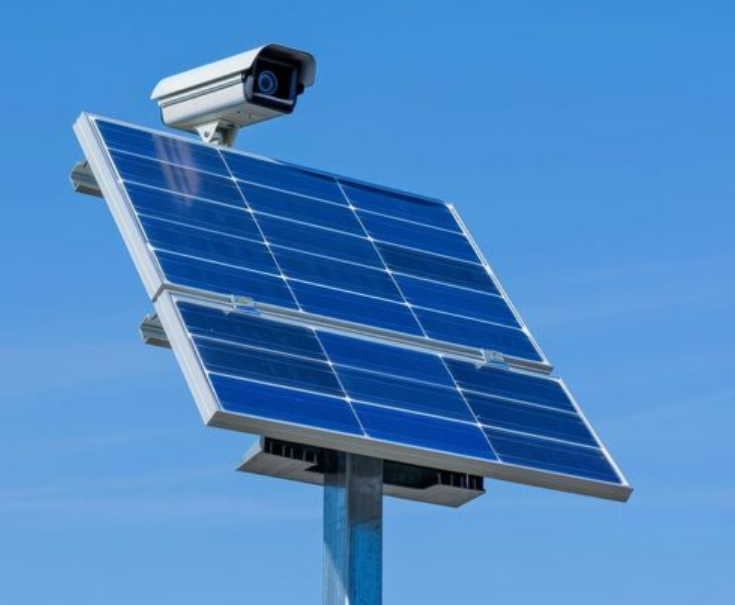
This solution addresses the problem at the root. A self-contained unit with a solar panel, battery storage, and cellular connectivity is a complete monitoring system that requires nothing from the site infrastructure. It can be installed in an afternoon and moved the following week if the site plan changes.
Camera coverage is no longer constrained by cable runs. A project team can position cameras for monitoring effectiveness rather than electrical convenience. Perimeter coverage can be comprehensive rather than limited to the sections near a power source. Remote corners of large sites become as monitorable as the site office.
For projects in remote locations or where grid power is unreliable, the advantage is even more pronounced. The camera system operates independently of whatever electrical infrastructure the site has. Power cuts and generator failures do not take the monitoring system offline.
What Wireless Solar Security Cameras Actually Deliver
The term wireless solar security cameras covers a wide range of products at very different quality and capability levels. Understanding what a professional-grade system delivers — as opposed to a consumer unit marketed with the same label — is the foundation for specifying something that will actually work on a demanding construction site.
Resolution and night performance are the primary technical specifications for construction site security. A camera that produces clear 4K footage in daylight but degrades to unusable quality after dark is not a security camera — it is a progress documentation tool. The incidents that solar cameras are deployed to prevent or record disproportionately occur at night.
Battery capacity and solar panel sizing determine whether the system runs continuously or gaps out during extended poor weather. The battery reserve — measured in days of continuous operation without solar input — is the figure that determines resilience. A professionally specified system should provide a minimum of five to seven days without solar charging.
Connectivity is the third critical specification. Wireless solar security cameras transmit footage and alerts via cellular network — 4G or 5G depending on site location and coverage. The connectivity specification determines whether footage can be reviewed remotely in real time, whether motion alerts reach the monitoring team immediately, and whether the system integrates with the broader site monitoring and access control infrastructure.
Solar Surveillance Cameras on Construction Sites: The Specific Use Cases
Construction sites use solar surveillance cameras across a range of applications that go beyond simple security monitoring. Understanding the full scope of what these systems can be used for changes the calculation on how many cameras a site needs and where they should be positioned.
Perimeter security is the most obvious application. A solar camera on each section of hoarding or temporary fencing provides comprehensive coverage without cable runs between panels. The cameras monitor for breach events overnight and provide the footage record that supports investigation and insurance claims following an incident.
Materials and plant security is a specific concern on most construction sites. High-value materials — copper, steel, specialist finishes — and expensive plant equipment are consistent theft targets. A solar camera positioned to cover the materials storage area and the plant compound provides both a deterrent and an evidence record.
Access control documentation is an increasingly important application. A camera covering the site entrance records every vehicle and person entering and leaving, with timestamp accuracy that manual sign-in systems cannot match. For sites with high subcontractor turnover or significant materials delivery activity, this access record has operational as well as security value.
Best Timelapse Camera Solutions — provide both functions from the same hardware. The camera that monitors the site overnight documents the construction sequence during the day. The investment in solar-powered infrastructure serves both the security and the documentary function, reducing total system cost relative to deploying separate systems for each purpose.
The Night Performance Question That Most Buyers Get Wrong
The single most common specification mistake when commissioning solar security cameras for construction sites is prioritising daylight performance over night performance. This is understandable — daytime footage is more visually compelling in a product demonstration, and the marketing materials for consumer-grade systems almost universally lead with daytime images.
The critical events on a construction site happen at night. Theft typically occurs in the hours after the site closes. Vandalism and unauthorised access are overwhelmingly nocturnal. An incident at 2am needs to be recorded by the camera monitoring that area at 2am.
Professional construction site cameras use one of three night vision technologies: infrared illumination for monochrome images in complete darkness, full-colour night vision using a highly sensitive sensor and discreet white light illuminator, and starlight technology using an extremely sensitive sensor to produce usable colour images in near-darkness.
For most construction site deployments, full-colour night vision with a white light deterrent is the specification that provides both the evidence quality and the active deterrent function that professional solar surveillance cameras should deliver. The white light triggers on motion detection, illuminates the area being accessed, and simultaneously deters the intruder and produces colour footage that is identifiable in an investigation.
Specifying a Solar Camera System for Your Construction Project
The questions that determine whether a solar security cameras programme delivers the security and monitoring value you need — or just generates footage that nobody reviews until something has already gone wrong.
How many cameras does the site actually need? The answer is driven by the site footprint, the number of distinct risk zones, and the required coverage overlap. For a serious construction site, the camera placement plan should be produced by someone who has walked the site, not calculated from a floor plan.
What is the solar panel and battery specification for this location and this season? The battery reserve specification should be verified against the worst-case solar conditions for the project location and duration. For a project running through winter in a northern latitude, a system sized for summer performance will fail when site security is most needed.
How will alerts be monitored and responded to? A camera generating motion alerts in the middle of the night is only useful if someone receives and acts on those alerts. The monitoring arrangement — whether a dedicated security monitoring centre, an on-call site manager, or a remote monitoring platform — should be agreed before the system is installed.
What is the data management and footage retention arrangement? Footage overwritten after 72 hours because the storage capacity was not specified correctly is footage that will not exist when an incident is investigated a week later. The storage specification, retention period, and footage access arrangement should all be confirmed at commissioning.
Why Solar Monitoring Has Become the Default for Remote and Fast-Moving Sites
There was a time when solar-powered site security was a workaround for sites that could not conveniently access mains power. That framing has inverted. The question now is why you would run cable to a construction site camera when solar provides a more flexible, more reliable, and ultimately more cost-effective solution for the majority of deployments.
The flexibility argument is decisive for sites where the monitoring requirements change as the build progresses. Solar-powered cameras can be repositioned as the site plan evolves — moved from the perimeter to the structural frame as it rises, repositioned from the materials compound to the finished units as handover approaches. A mains-powered system stays where the cable reaches. A solar system goes where the monitoring need is.
The total cost argument is less obvious but equally compelling. The capital cost of running cable to a remote camera position on a large site — trench, conduit, electrical installation, reinstatement — frequently exceeds the cost of the solar camera system itself. When that infrastructure cost is avoided, solar monitoring is not the premium option. It is the cost-effective one.
The reliability argument matters most on long-duration projects. A solar system with adequate battery reserve continues operating through power cuts, generator failures, and supply interruptions that would take a mains-powered system offline. For a project where continuous monitoring is a contractual or insurance requirement, that reliability is a specification requirement.
The Site That Is Not Being Watched Is the Site That Gets Hit
Construction site theft and vandalism are not random. They are targeted. Sites that are visibly monitored get skipped in favour of sites that are not. The visible presence of cameras on perimeter fencing, at access points, and covering materials storage communicates to anyone considering the site as a target that they will be recorded.
A properly specified solar security cameras programme is not just a recording system — it is a deterrent. The camera that is seen changes the calculation for the person considering whether to act. The camera that is not seen records what happens when they decide the site is unwatched. Both functions have value. The deterrent function is cheaper.
Commission the system before the site is live. Position cameras for monitoring effectiveness, not cable convenience. Specify the night performance, the battery reserve, and the monitoring arrangement upfront.
The incident that does not happen because the site was visibly monitored costs nothing. The one that happens because it was not is never cheap.
The Questions Underneath the Questions
What site managers and project teams actually ask. And the concern usually behind the question.
How long do solar security cameras actually last on a full battery charge with no sun?
The honest answer depends on the camera specification, capture settings, and whether motion detection alerts are being transmitted. A professionally specified solar camera should provide a minimum of five to seven days of operation without solar input. Ask for the figure under full operational specification — not the best-case figure achieved by reducing functionality.
Can solar cameras handle the dust, vibration, and physical conditions of a working construction site?
Professional-grade construction site cameras are rated to IP66 or IP67 ingress protection standards, meaning they are sealed against dust and water in conditions that would destroy consumer-grade equipment. Ask for the IP rating and operating temperature range when evaluating any system. A camera specified for indoor or residential use will not survive a winter on a construction site.
What happens to the footage if the camera is stolen or damaged?
A professional solar camera system transmits footage to a remote cloud storage platform as it is captured — meaning the footage exists on a server the thief cannot access. A system that stores footage only on a local SD card loses all footage if the camera is stolen. Cloud-based storage with continuous upload is the only specification that provides genuine evidential value.
How do we integrate solar cameras with our existing site access control system?
Integration between solar cameras and access control systems depends on the specific platforms involved, but most professional-grade systems support integration via API or a unified monitoring platform. The practical integration most construction sites need: the camera covering the site entrance records footage timestamp-correlated with the access control log.
Is a solar camera system sufficient on its own, or do we need additional security measures?
Camera monitoring is one layer of a construction site security programme, not a complete solution. The most effective site security combines physical deterrents — adequate hoarding, secure compound storage, anchor points for plant and equipment — with monitored camera coverage and a clear incident response protocol. The monitoring arrangement is as important as the camera specification.
What is the realistic coverage area of a single solar security camera?
Coverage area depends on the camera lens and mounting height. A standard wide-angle lens at three to four metres provides reliable identification-quality coverage of approximately fifteen to twenty metres. The relevant specification is the area within which the camera produces footage usable for identification — typically narrower than the total field of view figure in marketing materials.
How do we ensure solar cameras keep working through a UK or northern European winter?
Winter performance in northern latitudes catches most under-specified systems. Shorter days, lower sun angles, and overcast conditions significantly reduce solar input. The winter-proof specification requires a battery reserve of at least seven days, a solar panel sized for winter sun angle, and a low-power operating mode. Ask any provider specifically how the system performs in December at your site latitude.